
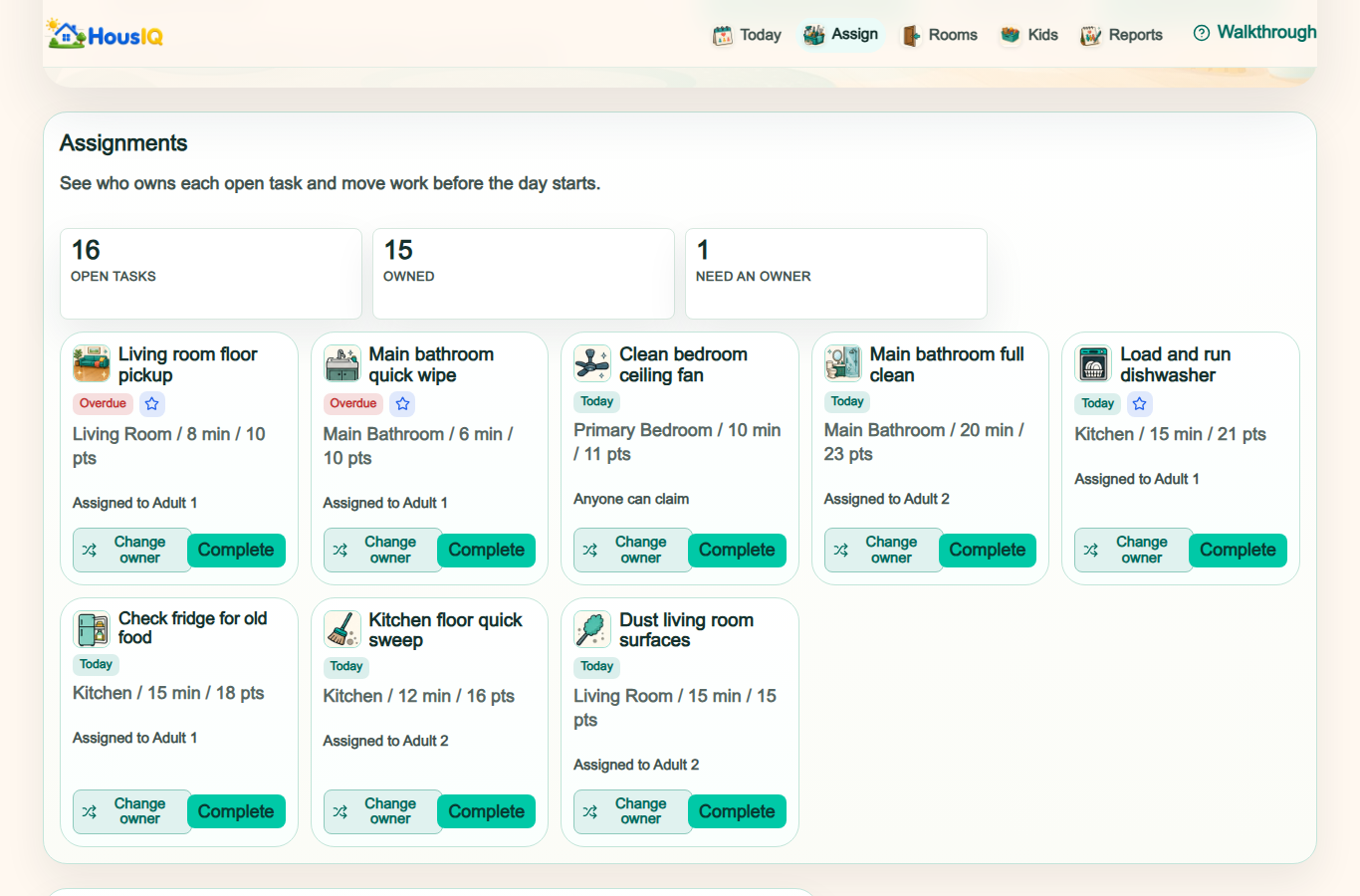
When chores are uneven, the instinct is to have the conversation. That usually goes badly, because the two people are arguing from different information: one has been counting for months and the other genuinely has not noticed. The productive order is to make the pattern visible first, then talk about it.
Track for two weeks before saying anything
Two weeks is enough to show a pattern and short enough that nobody is building a case. Record what was done, by whom, including the small daily jobs. This is worth the delay because it changes the nature of the conversation completely. Without it you are asking someone to accept your account of months of housework, which is a lot to ask of anyone, however fair it happens to be.
Lead with a chore, not a total
'The bins have come back to me every week this month' is specific, checkable, and easy to fix. 'I do more than you' is a verdict, and the natural response to a verdict is a defence. Pick the two or three clearest examples and open with those. The general pattern will come up on its own once the specifics are agreed, and by then you are solving rather than litigating.
Separate the doing from the remembering
Very often the task count is close to even and the imbalance is entirely in who tracks the schedule. That distinction matters because the fix is different: redistributing tasks does nothing about it, and the person carrying it will still be exhausted afterwards. If one person is the reminder system, the goal is to replace them with an actual schedule rather than to hand them fewer chores.
Look for the jobs that always return
Almost every uneven household has three or four chores that land on the same person regardless of any agreement. They tend to be the unpleasant ones, the invisible ones, or the ones with awkward timing. Those are the ones to reassign first. They carry most of the resentment, and fixing them changes the feel of the split far more than evening up the totals does.
- Jobs with no natural finish, like tidying
- Jobs that must happen at an inconvenient hour
- Jobs nobody else has ever noticed being done
Rebalance by time, not by task count
Four chores each is not an even split. Multiply how long each job takes by how often it repeats, and divide on that total. A five-minute daily job outweighs a forty-minute weekly one, which is rarely how either person had it in their head. Doing the arithmetic replaces a disagreement about impressions with a number, and numbers are much easier to adjust than positions.
Agree the review before you need it
Set the next review while things are calm, ideally a fortnight out. A scheduled review means the next imbalance is raised as a diary item rather than an accusation. This is the part that keeps the fix from unwinding. Splits drift back, and a household that has agreed to look again treats that as normal rather than as a betrayal.
Questions families ask before choosing
How do I bring this up without a row?
Lead with one specific recurring chore that keeps coming back to you, and pick a calm moment rather than the moment you noticed it again. Specific and checkable is much harder to argue with than a claim about overall effort.
What if my partner genuinely does not see the work?
That is common and usually honest. Someone who has never had to track a household often has no model of the noticing involved. A written record of two weeks is more persuasive than any description of it.
Is it fair to expect an exactly even split?
Not always. Shift work, commutes, caring, and illness all change capacity. What matters is that the split is agreed openly rather than defaulting to whoever has the lowest tolerance for mess.
What if nothing changes after we talk?
Move from agreement to structure: named owners, fixed days, and a visible schedule. Repeated conversations without a structural change tend to produce a fortnight of effort and then the same pattern.