
Mental load is the part of running a home that never appears on a chore list: remembering, noticing, planning, and following up. It is why someone can feel exhausted by a household while being unable to point at what they actually did. Sharing it is a different problem from sharing chores, and doing more tasks does not solve it.
Mental load is three jobs, not one
It helps to separate the parts, because households usually share only the last one. There is noticing that something needs doing, deciding when and how it happens, and then the doing itself. A partner who takes on tasks but is told about each one has taken a third of the work. Once the three are named, it becomes much easier to say what is actually uneven, and much harder to mistake willingness for shared load.
- Noticing: seeing that a job exists before anyone mentions it
- Planning: deciding when it happens and what has to happen first
- Doing: the visible part, and usually the smallest
Get the list out of one person's head
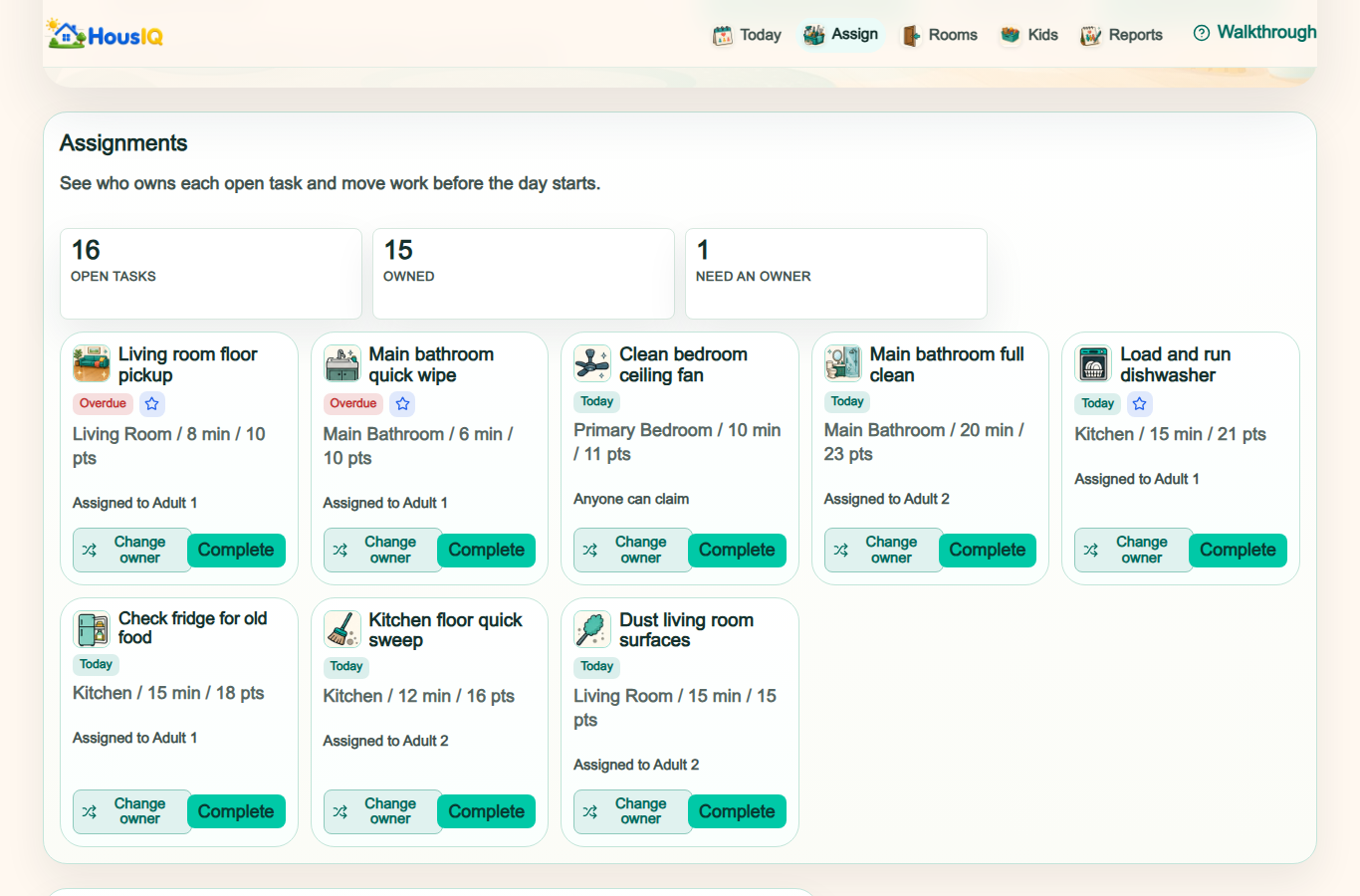
As long as the schedule lives in someone's memory, that person is on duty permanently, because only they can tell whether anything is being missed. This is the root of it. Everything else is a symptom. Writing the recurring work down, with real frequencies rather than vague intentions, converts a memory job into a reference anyone can check. That single change removes more load than redistributing tasks does.
Hand over whole jobs, including the deciding
Handing someone a task while keeping the timing keeps the load. 'Can you do the bins tonight' is help; 'the bins are yours' is a transfer. The second is uncomfortable at first because it means accepting they will be done differently, and sometimes later than you would have done them. That discomfort is the actual cost of sharing mental load, and it is why most attempts stall. A job you keep checking has not moved.
Stop being the reminder system
If a partner relies on being prompted, the prompting itself becomes a recurring chore with no end. Replace yourself with something neutral: a schedule, a recurring reminder, anything that is not a person. This also removes the worst dynamic in an uneven household, where one adult ends up managing another and both of them resent it. A schedule can nag without anyone feeling supervised.
Make the pattern reviewable
Mental load is hard to argue about because it leaves no evidence. A record of what recurred and who handled it turns an impression into something checkable, which changes the conversation from how each person feels to what actually happened. Review it periodically rather than in the middle of a bad week. The aim is to spot jobs drifting back to one person while it is still a small correction.
Expect it to drift back
Mental load returns to whoever has the lowest tolerance for things being undone. That is not a character flaw, it is just how it settles, and it means sharing it is not a one-off conversation. A short review every season is usually enough. What matters is catching the drift early, while it is still a scheduling problem rather than a resentment.
Questions families ask before choosing
What is the difference between mental load and chores?
Chores are the visible tasks. Mental load is knowing which ones exist, when they are due, and whether they happened. Two people can complete the same number of chores while only one of them is holding the schedule.
My partner says they will help if I just ask. Why is that not enough?
Because asking is the work. Being the person who has to notice and then delegate keeps both the noticing and the planning, and leaves only the doing to share. Handing over whole jobs, timing included, is what changes it.
How do I hand over a job without redoing it afterwards?
Agree the standard once, then leave it alone. Redoing it teaches both of you that the job is still yours, and it is the fastest way for a transfer to fail.
Does a shared app actually reduce mental load?
Only if the schedule lives in it rather than in one person's head. A list someone else maintains and reminds you about is the same load with an extra step; a schedule that prompts everyone directly is not.