
Assigning chores by age works best when each job matches what a child can genuinely own from start to finish. The usual mistake is not asking too much. It is handing over a task that still needs an adult to notice it, start it, and check it, which leaves the household with the same work plus a negotiation.
Ages two to four: one-step, visible jobs
At this age the point is not the work, it is that jobs exist and belong to people. Choose things with an obvious start and finish, where success is visible without an adult verifying anything. Expect the job to take longer with help than without it. That is the cost of the next ten years being easier.
- Toys into one named bin
- Plate or cup to the sink after eating
- Shoes onto the rack
- Dirty clothes into the hamper
Ages five to seven: routines rather than single tasks
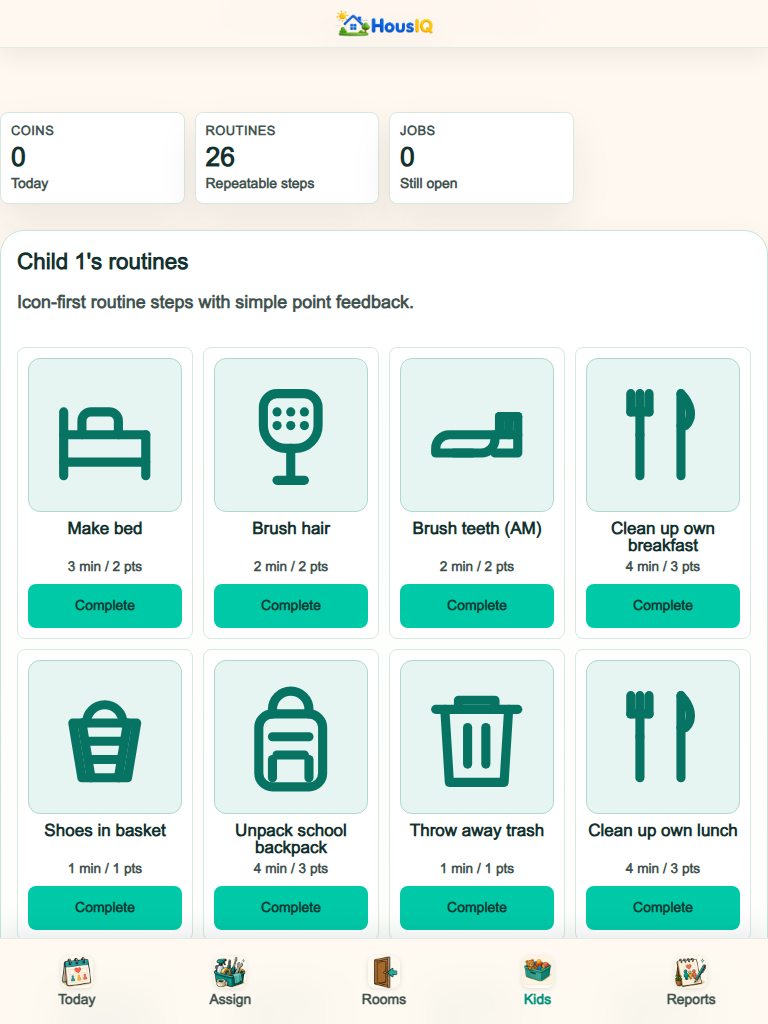
Children in this range can hold a short sequence, which means a morning or bedtime routine rather than an isolated chore. Three or four steps is realistic; ten is not. This is also the age where a visible checklist starts doing the reminding instead of a parent, which is the point at which chores stop adding to the adult workload.
- Make the bed, roughly counts
- Feed a pet with the food already measured out
- Set or clear the table
- Pack the school bag against a short list
Ages eight to eleven: whole jobs with a standard
Around eight, a child can own a job end to end, including noticing it is due. This is the first age where a chore genuinely removes work from an adult rather than relocating it. Agree what finished looks like once, then stop inspecting. Redoing a child's chore in front of them reliably teaches that the job is still yours.
- Hoover a room to an agreed standard
- Own the recycling from sorting to kerbside
- Strip and remake a bed
- Load, run, and empty the dishwasher
Twelve and up: jobs with consequences
Teenagers can handle chores where a miss is felt by someone else, which is what makes the work meaningful rather than performative. They can also handle planning: a job that requires noticing something is running low and acting before it runs out. What usually fails at this age is not capability but schedule collision. Pin their chores to days that survive school, sport, and work.
- Cook one meal a week, including the shopping for it
- Own the family laundry cycle for a day
- Take responsibility for a younger sibling's routine
- Track and restock a household supply
What stays on the adult list at every age
Some jobs should not move down regardless of how capable a child is: anything involving cleaning chemicals, ladders or working at height, sharp blades, hot surfaces, or power tools. This is worth stating explicitly rather than assuming, because these jobs are often exactly the ones a keen eleven-year-old will volunteer for.
Fewer jobs, genuinely owned
Two chores a child actually owns beat six they help with. A long list creates supervision work, and supervision is the thing you were trying to reduce. When a chore keeps failing, check whether it was ever really theirs. Most 'they will not do it' problems turn out to be jobs that still needed an adult to start them.
Questions families ask before choosing
What age should chores start?
Around two, with one-step jobs like putting toys in a bin. The aim at that age is the habit of belonging to a household, not the labour, which will be negative for several years.
Should chores be paid?
Households split on this and both approaches work. What tends not to work is paying for basic upkeep while leaving it optional, because it reframes shared responsibility as a job a child can decline.
How many chores is reasonable for a child?
Two or three they genuinely own is more effective than a longer list they assist with. The test is whether the job happens without an adult starting it.
What if my child does the job badly?
Agree the standard once and then leave it alone. Redoing it in front of them teaches that the job is still yours, and it is the fastest way to lose the handover.