
The chores that work for children are the ones repeated often enough to stop needing a decision. A job done every day becomes automatic within a fortnight. The same job done when someone remembers to ask stays a negotiation for years, which is why frequency matters more than the chore itself.
Ages two to four
Everything at this stage should have an obvious finish and need no judgement. The value is not the labour, which will be negative for a while. It is that the child learns jobs exist and belong to people.
- Toys into a named bin
- Plate and cup to the sink
- Shoes onto the rack
- Clothes into the hamper
- Fetch and carry during tidying
Ages five to seven
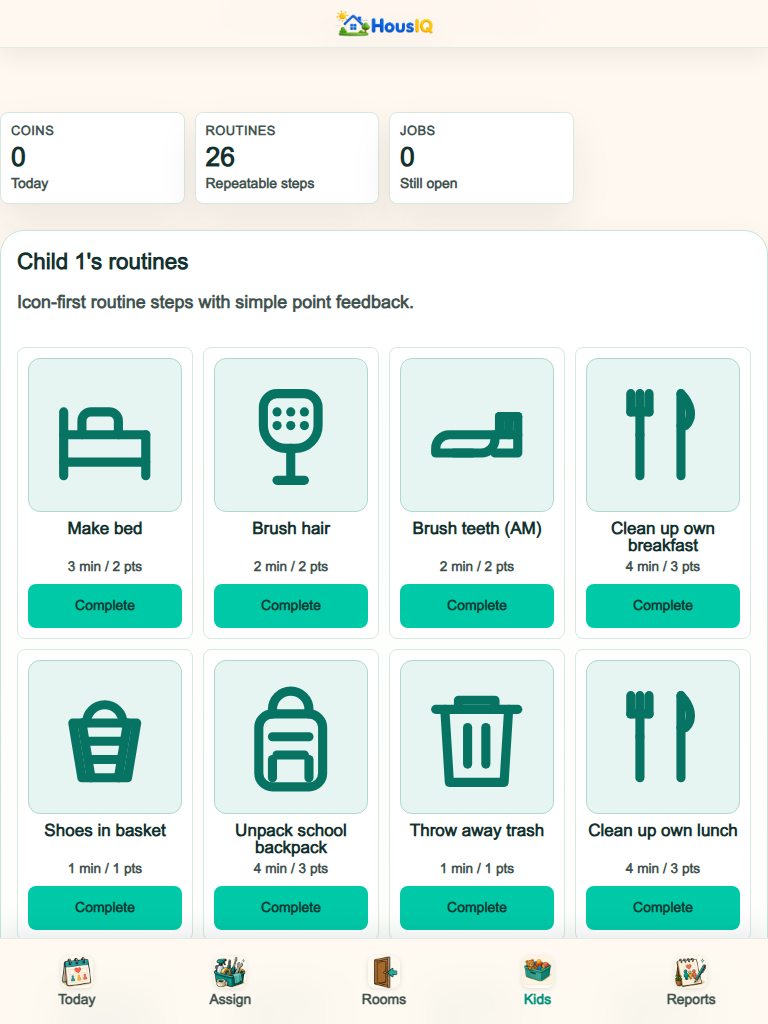
Children here can hold three or four steps, so give routines rather than isolated chores. A visible checklist starts doing the reminding at this age, which is the point where chores stop adding work for the adult.
- Make the bed, roughly counts
- Set or clear the table
- Feed a pet with food already measured
- Water plants
- Pack the school bag against a short list
Ages eight to eleven
This is the first age at which a chore genuinely removes work from an adult, because the child can notice it is due as well as do it. Agree the standard once and then stop inspecting.
- Hoover a room to an agreed standard
- Own the recycling end to end
- Strip and remake a bed
- Load, run, and empty the dishwasher
- Prepare their own school lunch
Twelve and up
Teenagers can take jobs where a miss is felt by someone else, which is what separates real responsibility from performance. They can also handle noticing a supply is low and acting before it runs out.
- Cook one family meal a week, shopping included
- Own the laundry cycle for a day
- Help a younger sibling through a routine
- Track and restock a household supply
- Take on a share of outdoor work
Off the list at every age
Regardless of capability, some jobs should stay with adults: cleaning chemicals, ladders and heights, sharp blades, hot surfaces, and power tools. Worth saying out loud rather than assuming, because these are frequently the jobs an enthusiastic ten-year-old will offer to do.
Daily beats impressive
A small chore done every day builds a habit. A large chore done fortnightly never does, because there is never enough repetition for it to stop requiring a decision. If you have to choose, choose the boring daily job. It is the one that will still be happening next year.
Match the chore to the moment, not just the age
A chore that fits a child perfectly on paper will still fail if it lands at the wrong time of day. Asking a six-year-old to tidy at bedtime, when they are least able to cooperate, turns a reasonable job into a nightly argument that has nothing to do with capability. Attach children's chores to things already happening: clearing the plate as part of finishing a meal, hanging the towel as part of getting out of the bath, packing the bag as part of leaving. Riding an existing routine removes the need to remember a separate occasion, which is the part children find hardest at every age.
Let the standard be theirs
The fastest way to lose a chore you have successfully handed over is to redo it in front of the child. A remade bed or a re-swept floor communicates clearly that the job was never really theirs, and children read that signal accurately. Agree once what finished looks like, pitch it lower than you would do it yourself, and then leave it. A bed made badly every day is worth more than a bed made perfectly by you, because only one of those is teaching anything.
Questions families ask before choosing
What chores can a 4 year old do?
One-step jobs with a visible finish: toys into a bin, plate to the sink, shoes on the rack, clothes into the hamper. Expect it to take longer with their help than without for a while.
What chores should a 10 year old have?
Whole jobs they own including noticing they are due: hoovering a room, running the dishwasher, managing the recycling, remaking a bed. This is the first age where a chore genuinely reduces adult workload.
How many chores should a child have?
Two or three genuinely theirs beats a longer list they help with. A longer list creates supervision, which is usually the thing you were trying to reduce.
Should chores be tied to pocket money?
Households differ and both approaches work. What tends to fail is paying for basic upkeep while leaving it optional, since that reframes shared responsibility as work a child can decline.