
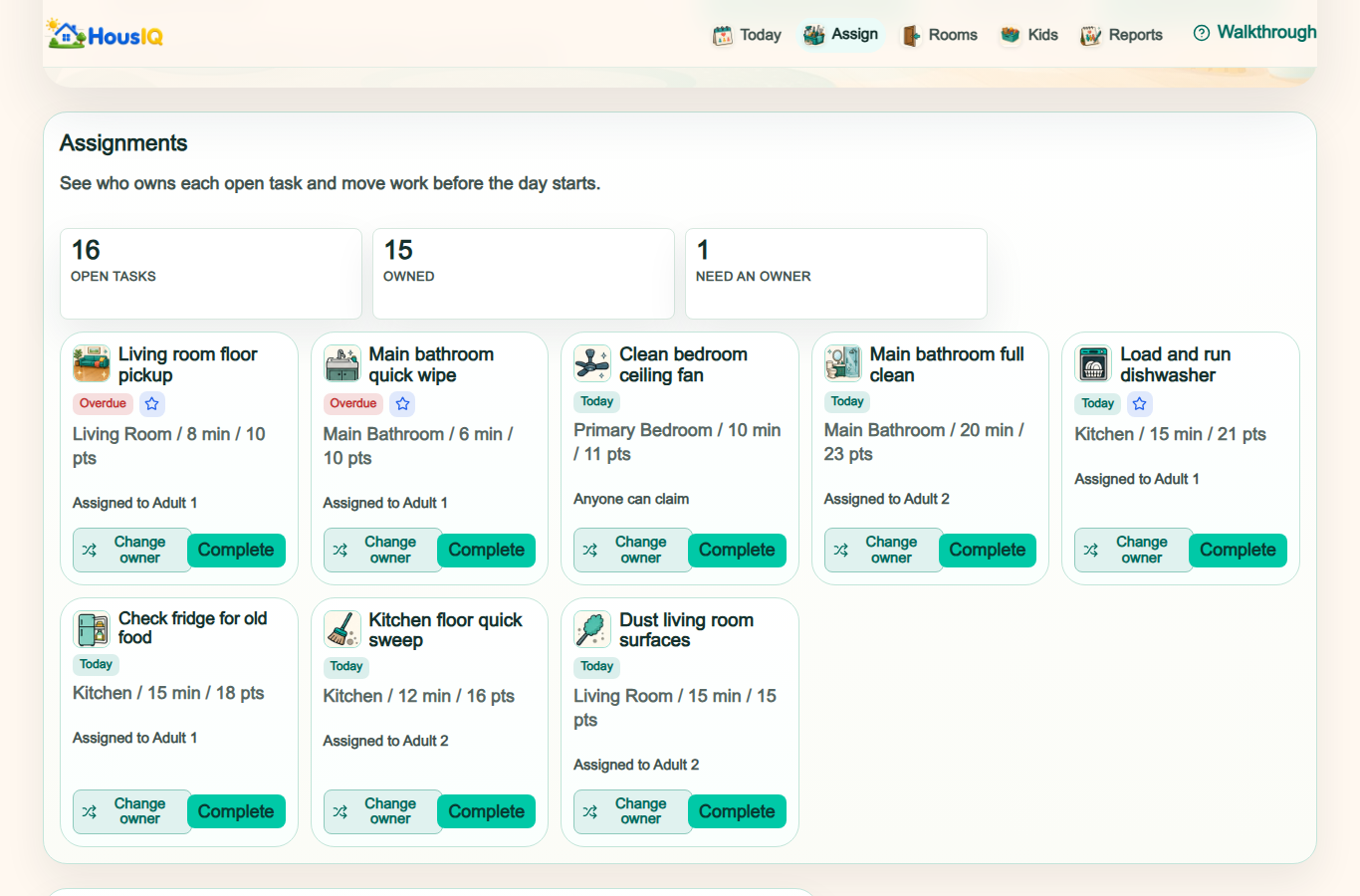
Most shared chore systems work for about two weeks. The failure is predictable enough to plan around: enthusiasm carries the first fortnight, then a bad week arrives, something slips, and the system quietly reverts to whoever minds most. Making chores stick is mostly about designing for that third week rather than the first.
Design for the bad week, not the good one
Any system works when everyone has time. The one that matters is the week with illness, deadlines, and a late night, because that is the week that decides whether the system survives. Build in slack from the start: a lighter day, a catch-up slot, an agreed way to skip something without it counting as failure. A schedule with no room to miss anything teaches people that it is already broken.
Write down what finished means
Most chore arguments are not about effort, they are about definition. 'Clean the kitchen' means wiped counters to one person and includes the hob, sink, and floor to another. Both people are acting in good faith and both feel let down. Agree the standard once, in writing, in the shortest possible form. It ends the argument permanently and takes about five minutes.
- Kitchen: counters wiped, sink empty, hob clean, floor swept
- Bathroom: sink, toilet, mirror, floor, bin emptied
- Laundry: washed, dried, folded, and put away, not left in the basket
One owner, not a rota nobody tracks
Rotas fail because they require someone to remember whose turn it is, which is the reminder job in a different shape. If a rota is doing the work, it needs to be visible and automatic; if it is not, name a single owner per chore and swap ownership deliberately every month or two. A job with one name attached either happens or is visibly not happening, and both outcomes are more useful than a shared job quietly landing on the same person.
Never let doing the chore be optional and invisible at once
A chore can be optional, or it can be invisible, but not both. If nobody sees that it was skipped, the only person who notices is the one it falls back on, and that is where resentment starts. Making a miss visible is not surveillance. It is the difference between a system and a hope, and it means the household can respond to a problem rather than to a mood.
Review weekly, and change the schedule not the person
A short weekly look at what recurred and what got missed replaces the same argument happening daily. Keep it to a few minutes and keep it about the schedule. When a chore is missed three weeks running, the schedule is wrong. Change the day first, then the size, then the owner, and only ever one at a time or you learn nothing from it.
Expect drift and plan the reset
Even good systems decay. Someone's hours change, a child starts a new activity, and the split that fitted in March does not fit in September. Put a reset in the calendar every season. Rebuilding on purpose twice a year is far less work than rebuilding from resentment once.
Questions families ask before choosing
Why do chore systems stop working after a few weeks?
Because they are built for a week where everyone has time. The first difficult week has no slack in it, something slips, and the system reverts to whoever minds most. Slack designed in from the start is what prevents that.
Should we use a rota or fixed owners?
Fixed owners with a deliberate swap every month or two is more reliable, unless the rota is automatic and visible. A rota someone has to remember is the reminder job wearing a different hat.
How do we handle someone repeatedly not doing their chores?
Check the schedule before the person. A job missed every week is usually on the wrong day or too large. If it survives being moved and halved, then it is a conversation about the agreement rather than about the chore.
How often should we review?
A few minutes weekly for misses, and a proper reset each season or whenever someone's schedule changes. Most systems fail slowly, so the review matters more than the original plan.