
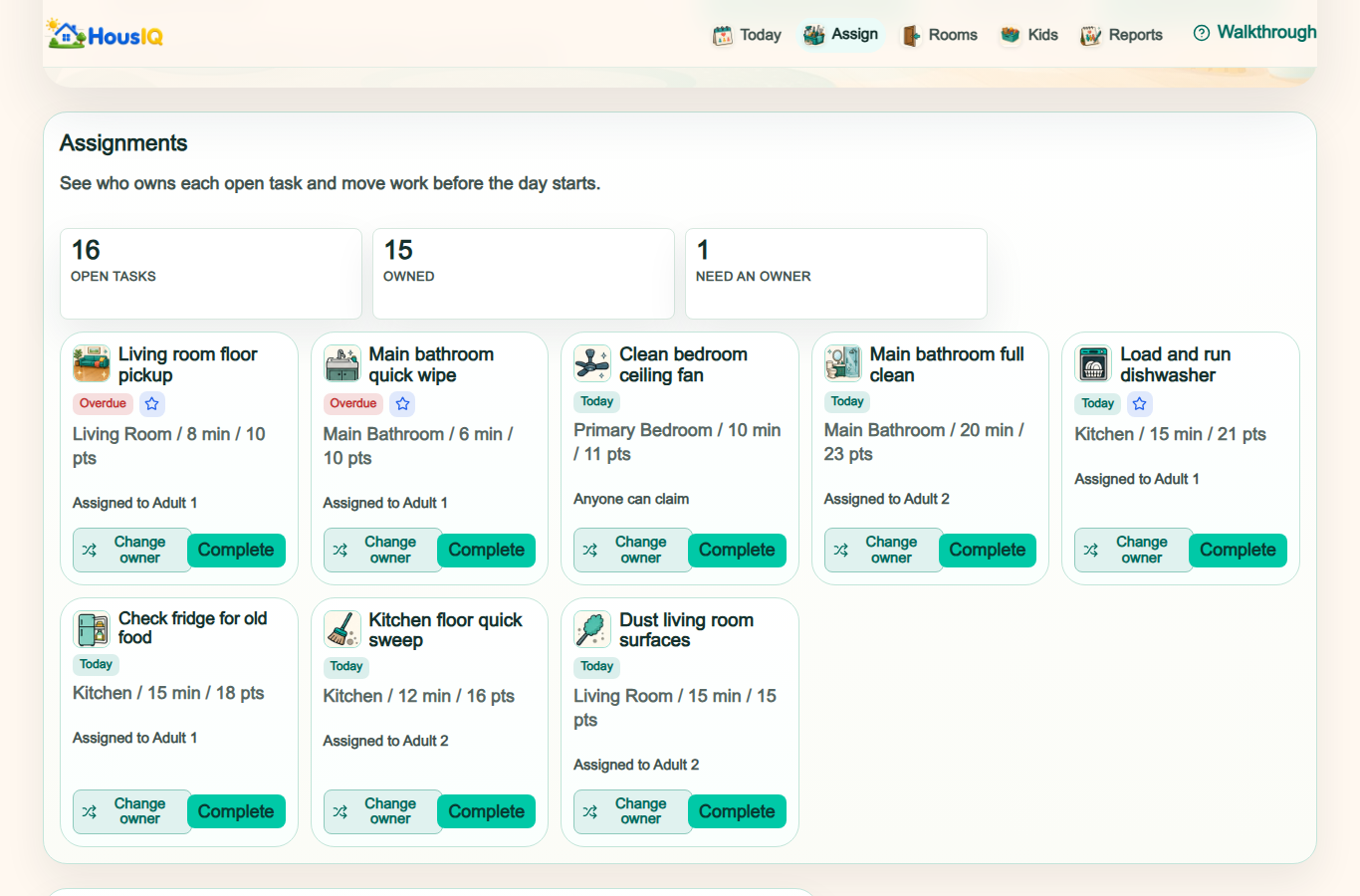
A daily chore checklist should make tomorrow easier. It should not turn every room, every deep-cleaning job, and every unfinished project into today's problem. Start with the work your household truly repeats, then give each item a clear owner and finish line.
Use this daily checklist as a starting point
Do not assign every item below just because it is on the list. Pick the work that happens in your home and remove the rest. A shorter list that gets followed is more useful than a complete list everyone avoids.
- Morning: breakfast dishes, pet care, beds if your household includes them, and anything needed for school or work
- After meals: dishes loaded or washed, table cleared, and the surfaces used for cooking wiped
- Laundry flow: start, move, fold, or put away the load planned for that day
- Shared spaces: return visible clutter to its place and reset the room for the next person
- Trash and recycling: check full bins, take out what is ready, and replace liners
- Before bed: reset the kitchen, put away loose items, and prepare what the household needs the next morning
Give each chore one clear assignment rule
The checklist should say more than what needs to happen. It should also say who is expected to notice and finish it. Use the assignment rule that matches the work instead of leaving every chore vaguely shared.
- One person: the chore belongs only on that person's list
- Everyone: each household member is expected to complete their own part
- Claimable: one eligible person can take the chore and the others can see that it is covered
- Rotation: the chore moves between people on a schedule everyone can understand
Keep each person's Today list focused
Personal chores should not crowd another person's day. Shared work should say that it belongs to everyone, and claimable work should explain that one person can take it. A person should be able to open the list and know what is actually theirs without sorting through the whole household.
Give children concrete, adult-managed chores
Adults should choose tasks that fit the child's ability, explain what done means, and keep the full household setup under adult control. Concrete actions are easier to follow than room names or vague instructions.
- Put toys in the marked bin
- Place shoes and backpacks in their home
- Move worn clothes to the hamper
- Clear assigned items from the table
- Complete a simple pet-care step with the adult check your household uses
Let weekly work stay weekly
Bathroom cleaning, floor care, bedding, deeper room resets, and household maintenance do not all need to appear every day. Give them a weekly, monthly, or real interval instead. Daily work should protect the next day, not recreate the entire house.
Review what keeps falling back to one person
At the end of the week, look at what was completed, missed, claimed late, or quietly finished by someone else. Change the owner, timing, or frequency when the plan does not match real life. The point is not a perfect streak. It is a household plan people can follow without one person becoming the reminder.
Put the checklist into your own household, assign each item clearly, and let recurring work return on schedule. No card and no automatic charge.
Start freeQuestions about daily family chores
How many daily chores should a family have?
Use only the chores that protect the next day or truly happen every day. If the list regularly carries over, move nonessential work to a weekly or monthly schedule instead of treating every miss as a failure.
Should everyone have the same number of chores?
Not necessarily. Count the effort, timing, ability, and follow-through involved, not only the number of rows. A fair plan can look different for each person and still keep one person from carrying the entire reset.
When should a chore be assigned to everyone?
Use an everyone task when each person must complete their own part, such as putting away personal items. If only one person needs to do the job, make it claimable or assign a clear owner so the household does not duplicate it.
How should children use a daily chore checklist?
An adult should choose the tasks, keep the wording concrete, and decide when a check is needed. Children can use a shorter list while adults keep control of the full household plan.
Can I print this family chore checklist?
Yes. Use the Print this checklist button near the top of the page. The print view keeps the practical sections and removes the website navigation and signup prompts.