
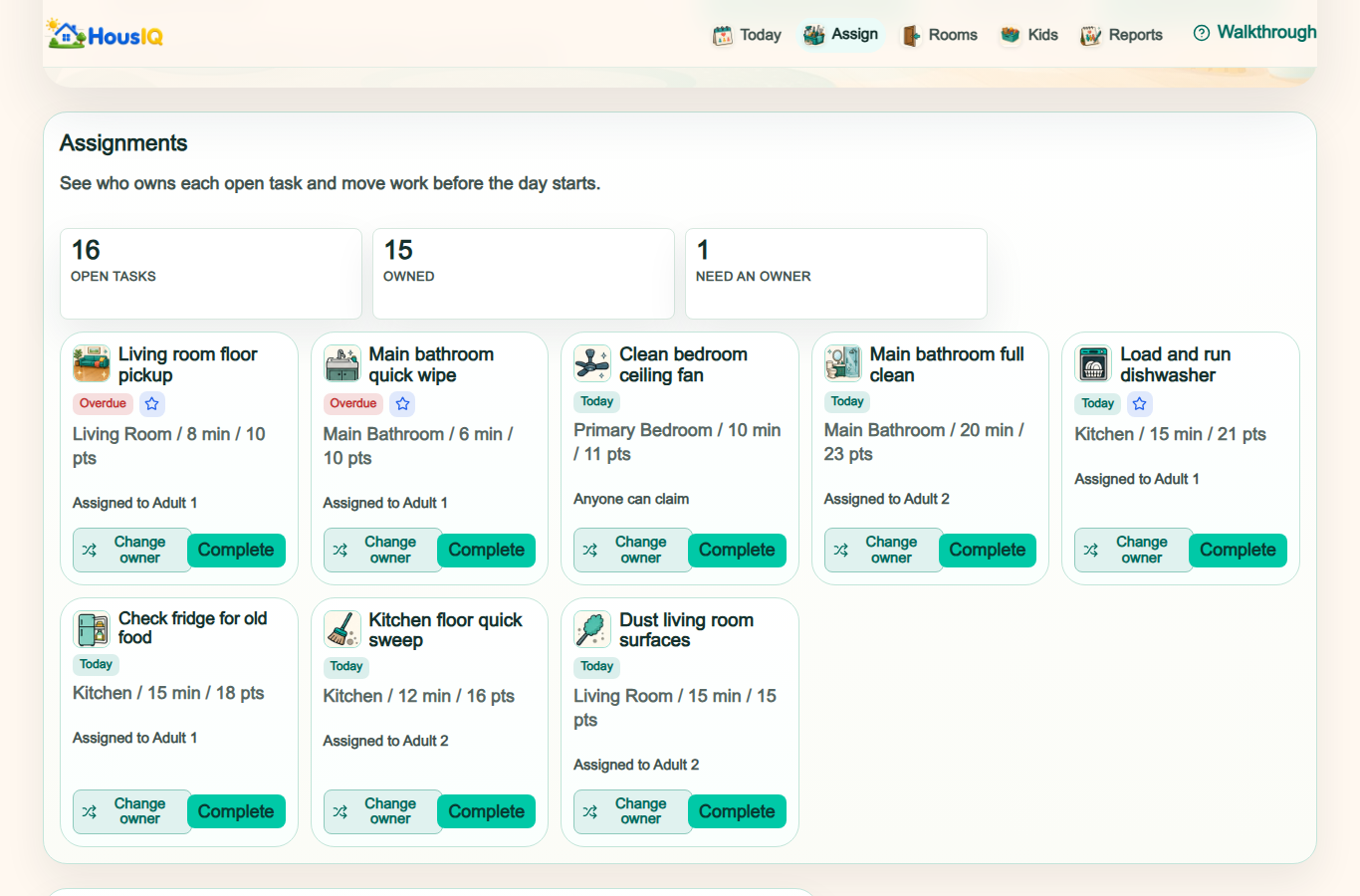
Recurring chores are easy to underestimate because each one looks small. The strain comes from noticing all of them, deciding when they should happen, and reminding everyone when they do not. A useful tracker has to hold that part of the work too.
Start with the work that happened in the last seven days
Do not begin with a perfect master list. Look at what someone actually did, noticed, or reminded another person about this week. Include the small resets that disappear from memory once they are finished. Group them by cadence so daily work does not compete with a filter change due three months from now.
- Daily: dishes, counters, pet care, visible clutter, trash checks, and the next load of laundry
- Weekly: bathrooms, floors, bedding, bins, room resets, and grocery planning
- Monthly: appliance checks, deeper cleaning, supplies, and household paperwork
- Seasonal or interval-based: filters, outdoor work, safety checks, and maintenance
Give every recurring task four clear details
A title alone is not enough. Each task needs a cadence, an owner, and a finish line. Write the task so another person can understand it without asking the person who created the tracker. That is what moves the planning out of one person's head.
- Name: use a concrete action such as Reset kitchen after dinner, not Kitchen
- Cadence: choose daily, weekly, monthly, or a real interval that matches the work
- Owner: assign one person, everyone, or a clearly defined claimable task
- Done: state the result when the task could otherwise be interpreted differently
Do not use shared when you mean three different things
Shared work becomes vague when the household cannot tell who is expected to act. A task for one person, a task every person must complete, and a task one eligible person can claim are different rules. Label them differently. If everyone sees the same task but nobody knows whether it is theirs, the tracker has only moved the confusion onto a screen.
- Assigned: one named person owns this occurrence
- Everyone: the responsibility applies to the whole household and should say so
- Claimable: one eligible person can take the task, and the owner becomes visible after it is claimed
Use a due window that matches real life
Not every recurring chore needs an exact alarm. A morning reset, after-school routine, evening close, or flexible weekly window is often more useful than 7:00 PM. Use an exact time when timing truly matters. Otherwise, let the tracker show when the work belongs without turning ordinary chores into a stream of notifications.
Keep each person's day focused
A household view can contain everything, but a personal Today view should not. Show people their assigned work, responsibilities that truly belong to everyone, and claimable tasks they are eligible to take. One person's private or assigned chore should not appear as an essential task on someone else's page. A focused list is easier to trust and much harder to ignore.
Review misses once a week instead of reminding all week
The tracker should show more than completed checkmarks. Look for chores that stay overdue, return unfinished, or repeatedly get completed by someone other than the assigned person. Then change one part of the plan: the owner, cadence, due window, or definition of done. The goal is not to produce a score. It is to stop repeating a setup that is not working.
Test the system with one ordinary week
Add one daily reset, one weekly room chore, one monthly task, and one claimable job. Complete each once and confirm that the next occurrence returns at the right time. Check the tracker as two household members. Make sure personal work stays personal, everyone tasks are unmistakable, and claimed work has a visible owner. If those four examples work, add the rest gradually.
Questions families ask before choosing
Should every household chore be recurring?
No. Repeat only the work that predictably returns. Keep repairs, requests, purchases, and other one-time needs separate so the recurring list stays useful.
What if a recurring task is always overdue?
Change the plan before adding more reminders. The task may have the wrong owner, an unrealistic cadence, a vague finish line, or a due window that does not fit the household's week.
Should recurring chores rotate automatically?
Rotation can help when people are eligible for the same work, but it is not automatically fair. Check the time and effort involved, whether someone is excluded for a practical reason, and who actually completes each occurrence.
How often should we review recurring household work?
A short weekly review is enough for most active chores. Monthly and seasonal work can be checked less often, as long as missed tasks remain visible instead of disappearing.